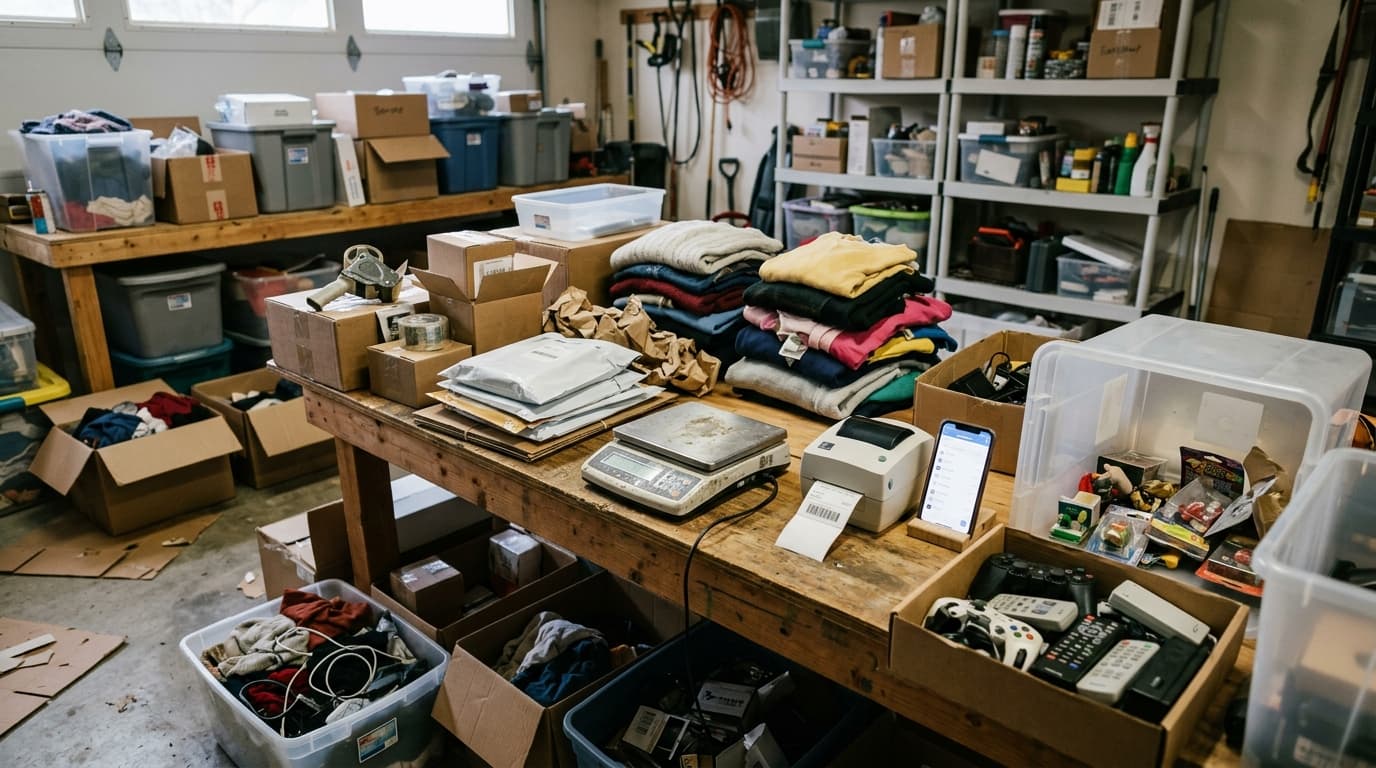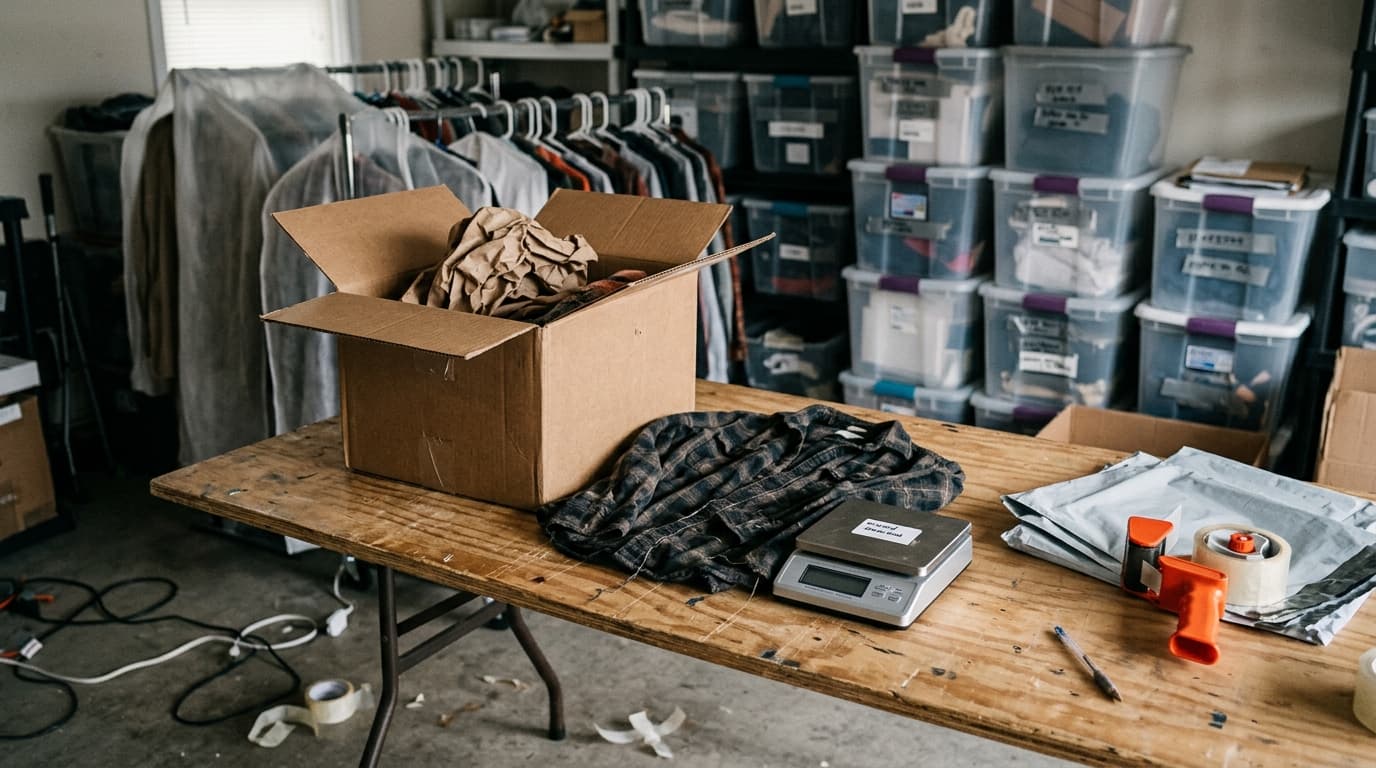
There is a $7 million Amazon wholesale operation that runs on roughly one day a week of owner labor, a 23-year-old who did $1.8 million in his first full year of online arbitrage, and an eBay part-timer who grossed $99,113 last year. All three numbers were published within the last six months. All three are linked below so you can check them yourself. And not one of them comes with a profit line attached.
I spent this week collecting every reseller I could find who is publicly reporting business metrics in 2026: YouTube recap channels, podcasts, newsletters, the platform reports, the community surveys. Then I graded what each one actually shows. The pattern is so consistent it's almost a law: the bigger the headline number, the less documentation behind it. Operators publish revenue. Software companies publish surveys. Nobody publishes a fully-loaded P&L.
That matters because you calibrate against these numbers whether you mean to or not. They set your sense of what a "good year" looks like, what's possible part-time, whether your operation is behind. If the public numbers are systematically top-line, your calibration is systematically off.
The roster, graded
Evidence quality is the column to read first. "Tool-derived" beats "on-screen math" beats "verbal claim" beats "promo copy," and the gap between tiers is wide.
| Who | Model | The 2026-era number | What it actually is | Evidence |
|---|---|---|---|---|
| Justin Resells | eBay, part-time | $99,113 in 2025 sales | Gross sales | Tool-derived, multi-year series |
| The Nurse Flipper | eBay/Etsy/Posh/Mercari/Whatnot, full-time | Weekly per-item COGS → profit | Contribution margin | On-screen item math |
| Justin Zsimovan | Amazon RA/OA | $844K 2025 sales, ~10 hrs/week | Gross sales | Verbal, podcast |
| Ryan, @CookingCashflow | Amazon OA | $1.8M first full year | Gross sales | Verbal, podcast |
| Matt Hassler | Amazon wholesale | $7M 2025 sales, 12-person team | Gross sales | Verbal, podcast, sells software |
| Business of Reselling | eBay US/CA + Poshmark | eBay-EIS opt-out results "by the numbers" | Operational data | Audio only |
| Pre-Loved survey | Vintage/thrift population | 81% of full-time dealers below living wage | Survey aggregate | 60+ respondents, self-selected |
| Whatnot report | Live selling population | $8B GMV, 23 hrs/week average | Platform aggregate | Company survey of own sellers |
A few of these deserve more than a row.
Justin Resells is the reporting standard everyone else should be held to. An eBay seller since 1999, posting an annual recap every December with the same methodology: $82,640 in 2024, $99,113 in 2025, part-time hours throughout. The numbers come out of Flipwise, the profit-tracking software he founded, which cuts both ways: it means the figures are pulled from actual transaction data rather than memory, and it means he has a product that benefits from the content. He discloses the connection. Multi-year consistency plus tooling plus disclosure is as good as public reseller reporting currently gets.
The Nurse Flipper is the only person showing real unit economics. Kat Breitbarth quit nursing in 2022 and publishes a weekly what-sold video walking through roughly 30 items with the purchase price and the net after fees and shipping, item by item: "sold for 30, payout 24, paid 5, that's 19 profit." Here is January 7th's installment. Watch one and you'll know more about secondhand-clothing margins than any income-claim video will ever teach you. The honest caveat, which she states herself: those per-item profits exclude overhead. Storage, mileage, supplies, software, insurance, and her own hours are not in the math. What she publishes is contribution margin, the same number your platform dashboard flatters you with, and she is the most transparent operator in the space. Hold that thought.
The Amazon numbers are a different genre. The Clear the Shelf podcast has run a steady 2026 lineup of arbitrage and wholesale operators reporting 2025 annuals: $844K on ten hours a week, $1.8M at age 23, $7M on a 12-person mostly-offshore team. These are real operators describing real businesses, and the episodes carry genuine operational detail about sourcing splits, team structure, and hours. But every dollar figure is verbal, every figure is top-line revenue, and several guests have something to sell (Hassler runs ReplenPulse; the podcast itself is promotional). One episode promises a seller "scaled to $3.6M/year" in retail arbitrage; when I tried to trace that figure, it appears only in the show's own promotional copy, not in any documented statement from the seller. It may well be true. From the outside, there is no way to know, and that's the point.
The surveys tell you what the influencer content won't. Emily Stochl's Pre-Loved income survey polled 60+ secondhand business owners in 2025 and found 81% of full-time dealers earning below a living wage. Small sample, self-selected, skewed toward apparel dealers, and she publishes the limitations alongside the result. The second annual edition opened June 2nd, which means year-over-year trend data on dealer income is about to exist for the first time. Whatnot's 2026 live selling report says sellers average 23 hours a week and 1 in 8 are full-time; useful workload context, but remember it's a company surveying its own sellers to market the platform.
The number nobody publishes
Line the roster up and look at what's missing. The best revenue reporter publishes gross sales. The best margin reporter publishes contribution margin and says so. The podcasts publish top lines. The surveys publish aggregates. In the entire public record of reseller reporting in 2026, I could not find one operator publishing a fully-loaded P&L: revenue, COGS, fees, shipping, overhead, owner hours priced at anything, and the actual profit line, on a recurring basis.
The incentives explain it. Revenue headlines grow channels; "$1.8M at 23" is a thumbnail, and "$19 profit on a sweater" is a much better video than "$11 profit on a sweater after overhead." Profit invites scrutiny that gross sales don't. And the survey data hints at the uncomfortable version: if 81% of full-time dealers earn below a living wage, the honest fully-loaded numbers for most operators would read as a warning label, not an aspiration.
I'm not accusing anyone on this list of dishonesty. Every operator above is reporting something real, and most are clear about what they're leaving out. The problem is structural: what's safe and rewarding to publish is exactly the number that misleads you, and what would actually calibrate you is exactly the number nobody has an incentive to share. (If you want to know your own, the free P&L + inventory tracker exists to produce exactly that line.)
How to read a published number anyway
You can extract real information from top-line claims if you force a margin band onto them before letting them into your head. Industry guides put arbitrage and wholesale net margins somewhere around 10–20%, but those figures usually leave out advertising, returns, overhead, and the owner's own hours; price those in and the realistic fully-loaded bands sit at the low end. Online and retail arbitrage nets roughly 10–15% once everything is counted; Amazon wholesale runs thinner, 8–12%, because it's a volume game on manufacturer-constrained pricing; thrift-sourced clothing shows a much fatter per-item contribution, 50–70%, but eats labor instead of capital.
Run the roster through it. Ryan's $1.8M at OA margins is roughly $180–270K of pre-tax profit, and his own public bio claims about $20K of profit a month, which lands at 13%, mid-band, so the claim hangs together. Zsimovan's $844K at the same band is $84–127K, a strong return on ten hours a week and a very different number than the headline. Hassler's $7M wholesale operation at 8–12% is $560–840K before the cost of a 12-person team and the working capital a thousand-SKU wholesale catalog ties up. Still excellent businesses. None of them is the business the headline implied, and the chain of subtractions from gross sales to take-home is long; the same logic at item level is the real-margin formula.
The honest tradeoffs
My verification has limits too. I checked claims against show notes, transcripts, and the sellers' own published materials; I did not audit anyone's books, and a verbal number can be perfectly honest. Absence from this roster doesn't mean absence of honest operators: Reddit's monthly what-sold threads and the Scavenger Life forums carry plenty of self-reported weekly numbers that I couldn't verify to the standard used here, which is a statement about documentation, not about the people posting. And contribution margin isn't a deceptive number; it's the right number for item-level sourcing decisions. It's only misleading when you mistake it for what the business pays you.
The pick
Follow three sources and skip the rest. Justin Resells for the discipline of a consistent, tool-derived annual series. The Nurse Flipper for item-level economics you can sanity-check your own buys against. The Pre-Loved survey for the population truth the success stories filter out. I'd change this list the day any operator starts publishing a recurring fully-loaded P&L, because that person would instantly become the most useful source in the space. The vacancy has been open for years.
This week
Two things. First, take whatever published number most recently made you feel behind, apply the margin band for that operator's model, and price their hours at your shadow rate; the feeling usually doesn't survive the arithmetic. Second, if you publish recaps of your own anywhere, publish the profit line, even rounded, even banded. The first operator to do it consistently earns a trust moat that no revenue headline can buy, and this publication will happily send readers your way.